
If you're unfamiliar with cooking directly on a gas stove's flame, you might be curious about its feasibility. Whether you're a newcomer to gas stoves or contemplating getting one for the first time, it's perfectly normal to have such inquiries. Rest assured, cooking directly on a gas hob is not only possible but also one of the significant advantages of owning one. You can use this method to cook in utensils or impart a smoky flavor by roasting your food directly in the flame.
This article aims to provide a comprehensive guide on everything you need to know about cooking directly on the flame of a gas hob. By the time you finish reading, you should have all the answers to your questions on this matter.
This article aims to provide a comprehensive guide on everything you need to know about cooking directly on the flame of a gas hob. By the time you finish reading, you should have all the answers to your questions on this matter.
How Does A Gas Stove Generate Flames?
Let's delve into the process of how the flame on a gas stove is initially generated. While your LPG or PNG cylinder contains gas, it is not yet flammable. Despite both LPG and PNG being highly inflammable with significant amounts of propane and methane, they won't ignite without the presence of oxygen. This is crucial to prevent the flame on the burner from traveling backward through the pipe and combusting all the gas along the way.
Connected to the control knobs on the gas hob, there's a nozzle-like component known as a 'gas jet.' The gas from the supply pipe passes through this jet before reaching the burner. The gas hob's design allows a controlled amount of air from the atmosphere to enter the system and mix with the gas after it has passed through the jet.
Now mixed with oxygen, the gas becomes flammable. As it leaves the burner and encounters a spark or a source of fire, it ignites, resulting in the flame. This is the process of flame generation.
During combustion, methane and propane transform into carbon dioxide and water vapor. However, incomplete combustion leads to the formation of carbon monoxide. In such instances, the flame color changes to yellow and orange, indicating that the stove requires maintenance.
Is It Safe to Cook Roti, Chapati, Or Meat Directly on This Flame?
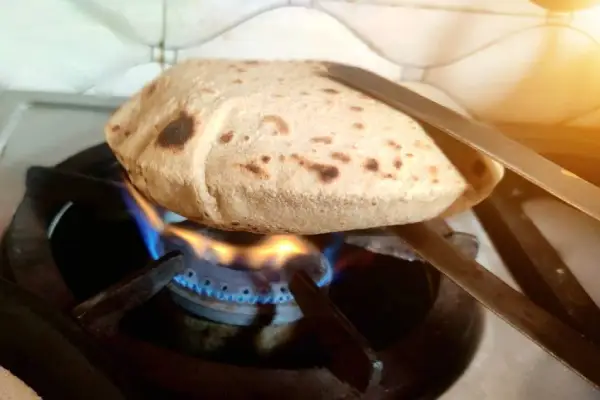
Baking or roasting rotis directly over a flame is a common and age-old practice in some countries. While it was traditionally done using wood or coal fires, the use of gas hobs for making rotis has become prevalent. In addition to rotis, a gas flame can also be utilized to roast and char meat, imparting a delightful smoky flavor.
Although cooking directly on a gas flame is possible, you might have concerns about its safety and the impact on food when charred by the flame. Rest assured, it is entirely safe to cook on the flame of a gas hob. While this method may give the food a slightly burnt or charred texture, it is a normal outcome when cooking over a direct flame.
Health concerns related to roasting food are primarily associated with cooking on charcoal, as burning charcoal can release certain carcinogenic compounds into the food. However, both LPG and NG are cleaner alternatives that do not release harmful elements under normal conditions. You can cook your chapatis or meat directly on the gas flame without any worries.
Although cooking directly on a gas flame is possible, you might have concerns about its safety and the impact on food when charred by the flame. Rest assured, it is entirely safe to cook on the flame of a gas hob. While this method may give the food a slightly burnt or charred texture, it is a normal outcome when cooking over a direct flame.
Health concerns related to roasting food are primarily associated with cooking on charcoal, as burning charcoal can release certain carcinogenic compounds into the food. However, both LPG and NG are cleaner alternatives that do not release harmful elements under normal conditions. You can cook your chapatis or meat directly on the gas flame without any worries.
The Alternative Of Cooking Directly On Gas – Grilling
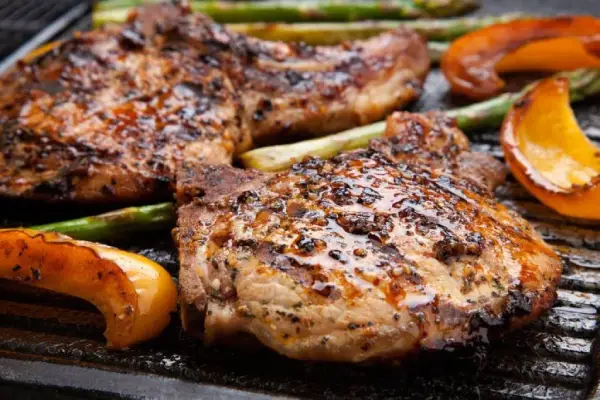
If you're still hesitant about cooking directly on a gas flame or just prefer an alternative method, you may opt for grilling your food instead. Grilling is a superior choice compared to roasting food directly on the flame, offering more satisfying results. Particularly when preparing meat, grilled meat tends to be much more flavorful than meat charred over a gas flame.
Now, how can you grill food on a gas hob? You have two options – you can either utilize a grill pan or a gas tandoor.
Now, how can you grill food on a gas hob? You have two options – you can either utilize a grill pan or a gas tandoor.
Grill Pan
A grill pan is a versatile kitchen tool that allows you to achieve a grilled effect on your food while using a gas hob. You can easily grill meat or vegetables on a grill pan, using it the same way as a regular frying pan.
Gas Tandoor
Your other option is to use a gas tandoor. A gas tandoor is a kitchen appliance designed to replicate the cooking style of a traditional clay tandoor but operates using a gas flame. The tandoor is a cylindrical oven widely used in South Asian and Middle Eastern cuisines to cook various dishes, including bread (such as naan) and marinated meats.
Instead of directly exposing the food to the flame, a gas tandoor gathers heat from its base and channels it into its chamber through an intermediary plate. The chamber, housing the food, remains closed with a lid to retain the trapped heat.
5 Tips for Cooking with Gas Hobs
If you’re planning to cook directly on a gas hob’s flame, here are a few tips for you.(gas hob for sale)
1. Safety First
Begin by understanding how to handle a gas hob in case of a malfunction. If attempting to light the flame results in no ignition, promptly turn off the hob. Continuing to have the hob on without a lit flame can lead to the accumulation of gas, posing a fire hazard.
2.Keep Loose Items at a Distance
When working with a gas hob, remember that you're cooking over an open flame. Unlike electric hobs, where objects like potholders have time to warm up, gas flames can quickly ignite loose items such as long hair, bracelets, and sleeves. Ensure these items are kept away to prevent fire hazards.
3.Remember the Heat
Cooking over an open flame alters your cooking approach. Recognize that the flame serves as the direct heat source for your pan, and once the flame is extinguished, the cooking process stops immediately. Turning off the burner just before removing the pan can minimize the risk of fire.
4.Start with Low Heat
Whether you're a novice cook or transitioning from an electric stove, cooking with gas hobs may require some practice. Ease into the process by starting to cook at lower temperatures than you typically would. Gas flames can heat food more rapidly than electric burners, so beginning with lower heat settings can be beneficial.
5.Master the Art of Simmering
Adapting to cooking with gas involves mastering the nuances of meal preparation. Simmering, a state between no heat and a full boil, is characterized by minimal bubbles on the surface. Practice adjusting the heat, erring on the side of lower temperatures to prevent burning and achieve the desired simmering effect.
1. Safety First
Begin by understanding how to handle a gas hob in case of a malfunction. If attempting to light the flame results in no ignition, promptly turn off the hob. Continuing to have the hob on without a lit flame can lead to the accumulation of gas, posing a fire hazard.
2.Keep Loose Items at a Distance
When working with a gas hob, remember that you're cooking over an open flame. Unlike electric hobs, where objects like potholders have time to warm up, gas flames can quickly ignite loose items such as long hair, bracelets, and sleeves. Ensure these items are kept away to prevent fire hazards.
3.Remember the Heat
Cooking over an open flame alters your cooking approach. Recognize that the flame serves as the direct heat source for your pan, and once the flame is extinguished, the cooking process stops immediately. Turning off the burner just before removing the pan can minimize the risk of fire.
4.Start with Low Heat
Whether you're a novice cook or transitioning from an electric stove, cooking with gas hobs may require some practice. Ease into the process by starting to cook at lower temperatures than you typically would. Gas flames can heat food more rapidly than electric burners, so beginning with lower heat settings can be beneficial.
5.Master the Art of Simmering
Adapting to cooking with gas involves mastering the nuances of meal preparation. Simmering, a state between no heat and a full boil, is characterized by minimal bubbles on the surface. Practice adjusting the heat, erring on the side of lower temperatures to prevent burning and achieve the desired simmering effect.
In Conclusion
In conclusion, you have the option to cook directly on a gas hob or utilize a grill pan or gas tandoor—each of these choices is safe and practical. As previously mentioned, there are no health concerns associated with cooking food over a direct flame. If you are inclined towards the convenience of a grill pan or the versatility of a gas tandoor, feel free to select the one that aligns with your preferences, as both offer excellent value for your investment.
Comparatively, a grill pan is lighter, simpler, and more user-friendly, while a gas tandoor is a highly versatile option that yields superior results. The decision between the two depends on your specific needs and preferences. I trust that this article has provided valuable assistance and addressed any questions you may have had regarding cooking directly on a gas hob.
Comparatively, a grill pan is lighter, simpler, and more user-friendly, while a gas tandoor is a highly versatile option that yields superior results. The decision between the two depends on your specific needs and preferences. I trust that this article has provided valuable assistance and addressed any questions you may have had regarding cooking directly on a gas hob.
Click here for tempered glass gas hob