
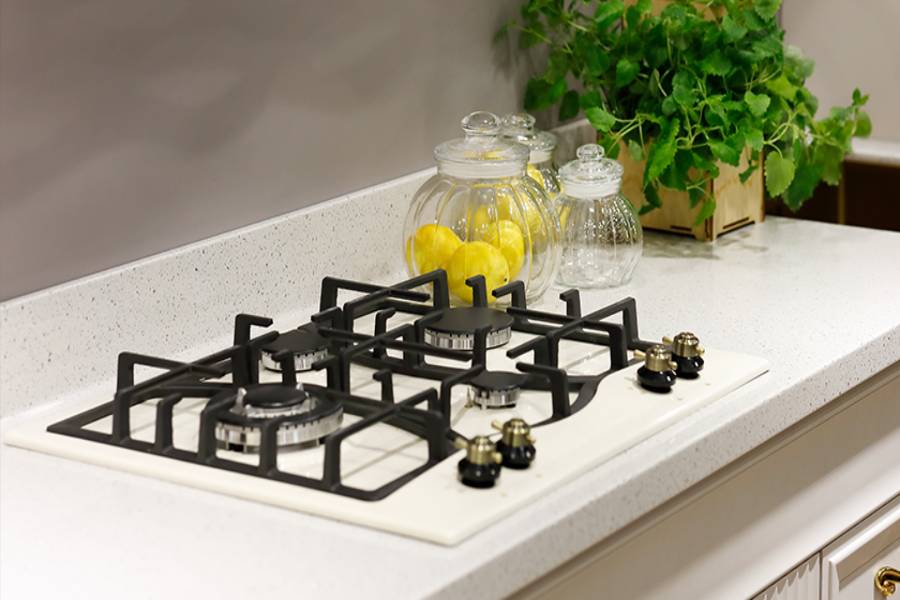
Choosing the right stove for your kitchen can impact the look of your kitchen, determine the way you work, and also determine the amount of space under the counter, etc. It takes a lot of planning to place the stove correctly. There is confusion in our minds about deciding between the two types of built-in gas hobs, which attract us with their sleek finish and modularity, as opposed to traditional cooktops. Aside from trends and prices, one should also consider installation, materials, finishes, efficiency, maintenance, and ease of use, among other things. To help you in your decision, the article discusses both a built-in gas hob and a conventional cooktop in detail. Use our 7-factor evaluation to guide you in making your choice.
Built-in Gas Hob
Gas hobs that are built in are flush with the counter. They are designed to give an overall seamless look and feel to the counter. With the introduction of modular kitchens, built-in hobs have carved themselves out a niche in the vocabulary and kitchens of urban users. It is possible to pick a built-in gas hob based on the number of burners and the type of burners you need (gas or electric). If you wish to know if a built-in gas hob is better suited to your kitchen, read the following features of a built-in gas hob.
1. Installation
Choosing a built-in gas hob should be one of the first items on your kitchen checklist. The installation process is somewhat complex, requiring a cavity to be cut into the counter to accommodate the hob. Planning your kitchen layout around this early is essential.
Choosing a built-in gas hob should be one of the first items on your kitchen checklist. The installation process is somewhat complex, requiring a cavity to be cut into the counter to accommodate the hob. Planning your kitchen layout around this early is essential.
2. Aesthetics
One of the major advantages of built-in hobs is their ability to provide a seamless and sleek finish to your kitchen. These hobs integrate seamlessly with the counter, creating a modern and modular look. Additionally, built-in hobs conceal gas pipes, resulting in a cleaner overall appearance. If you desire a polished, sophisticated kitchen, this is a great option.
One of the major advantages of built-in hobs is their ability to provide a seamless and sleek finish to your kitchen. These hobs integrate seamlessly with the counter, creating a modern and modular look. Additionally, built-in hobs conceal gas pipes, resulting in a cleaner overall appearance. If you desire a polished, sophisticated kitchen, this is a great option.
3. Materials and Finishes
Built-in hobs typically feature a stainless steel base with a tinted glass finish on top. This combination lends an elegant and contemporary touch to your kitchen space.
Built-in hobs typically feature a stainless steel base with a tinted glass finish on top. This combination lends an elegant and contemporary touch to your kitchen space.
4. Ease of Usability
Thanks to their level placement with the counter, handling utensils around the hob is convenient. The burners are operated using user-friendly knobs. Some models even offer innovative flame control options for both the outer and inner rings of the burner, allowing precise heat adjustments.
Thanks to their level placement with the counter, handling utensils around the hob is convenient. The burners are operated using user-friendly knobs. Some models even offer innovative flame control options for both the outer and inner rings of the burner, allowing precise heat adjustments.
5. Efficiency and Safety
Built-in gas hobs are designed to meet European standards, resulting in a lower flame intensity compared to traditional cooktops. While this may slightly extend cooking times, it contributes to safety. Built-in hobs are equipped with a flame failure feature that automatically shuts off the gas supply, minimizing the risk of accidents.
Built-in gas hobs are designed to meet European standards, resulting in a lower flame intensity compared to traditional cooktops. While this may slightly extend cooking times, it contributes to safety. Built-in hobs are equipped with a flame failure feature that automatically shuts off the gas supply, minimizing the risk of accidents.
6. Maintenance
Proper care and maintenance are crucial for ensuring the longevity of built-in gas hobs. Prevent water spillage and seepage around the burners, as this can cause damage. Regular cleaning is essential to prevent grime buildup on the hob's surface. A simple routine involves wiping the surface with alternating wet and dry wipes. Occasionally, professional maintenance services may be necessary.
Proper care and maintenance are crucial for ensuring the longevity of built-in gas hobs. Prevent water spillage and seepage around the burners, as this can cause damage. Regular cleaning is essential to prevent grime buildup on the hob's surface. A simple routine involves wiping the surface with alternating wet and dry wipes. Occasionally, professional maintenance services may be necessary.
7. Cost
It's worth noting that built-in gas hobs come at a higher cost compared to their traditional counterparts. Additionally, if any damage occurs, repairs or replacements can be expensive. However, the benefits in terms of aesthetics and usability may outweigh the initial cost considerations.
It's worth noting that built-in gas hobs come at a higher cost compared to their traditional counterparts. Additionally, if any damage occurs, repairs or replacements can be expensive. However, the benefits in terms of aesthetics and usability may outweigh the initial cost considerations.
Traditional Cooktop
A traditional cooktop is a freestanding stove that is placed on a counter, and it has been around for decades. The traditional cooktops have not only retained the basic concept, they have also seen a tremendous change in style and form to suit modern kitchens. Users can choose the model of the cooktop based on the number of burners they require. You can use the following features of a traditional cooktop to determine if it suits your kitchen or if you want to ease the decision of whether to keep it or not.
1. Installation
Traditional cooktops, with their freestanding design, are incredibly easy to install. No advanced technical skills are required. All that's needed is a provision for gas connection, and you're ready to go. The best part is their portability; they can be replaced or moved without any hassle.
2. Aesthetics
While many traditional cooktop models may appear bulky, innovations have introduced sleeker, less bulky options that complement contemporary interiors. However, it's worth noting that the gas pipe can be visible on the countertop where it connects to the stove, which some might find less appealing.
While many traditional cooktop models may appear bulky, innovations have introduced sleeker, less bulky options that complement contemporary interiors. However, it's worth noting that the gas pipe can be visible on the countertop where it connects to the stove, which some might find less appealing.
3. Materials and Finishes
Most traditional cooktops are constructed from stainless steel, though some brands now offer models with a tinted glass finish. This finish adds a touch of elegance to a modern kitchen.
Most traditional cooktops are constructed from stainless steel, though some brands now offer models with a tinted glass finish. This finish adds a touch of elegance to a modern kitchen.
4. Maintenance
Maintenance for traditional cooktops is straightforward. They can be easily disassembled and cleaned. Any spills are easy to clean, and the stove can be lifted for thorough cleaning, including the countertop beneath.
Maintenance for traditional cooktops is straightforward. They can be easily disassembled and cleaned. Any spills are easy to clean, and the stove can be lifted for thorough cleaning, including the countertop beneath.
(For those who prioritize cleanliness and wish to avoid adding extra cleaning duties to their routine, traditional cooktops are a practical choice, as cleaning and maintenance are crucial considerations for any appliance.)
5. Ease of Usability
Traditional cooktops are user-friendly, with burners operated using knobs. There are several innovations that enhance flame control settings. However, the 4" height of the stove can be a drawback for some individuals, as it increases the overall height and may pose challenges when loading and unloading heavy cookware.
Traditional cooktops are user-friendly, with burners operated using knobs. There are several innovations that enhance flame control settings. However, the 4" height of the stove can be a drawback for some individuals, as it increases the overall height and may pose challenges when loading and unloading heavy cookware.
6. Efficiency and Safety
Traditional cooktops tend to be more efficient than built-in hobs, thanks to their higher flame capacity, which reduces cooking time. However, it's important to note that traditional cooktops lack flame failure features, which means users must exercise caution when operating them to ensure safety.
Traditional cooktops tend to be more efficient than built-in hobs, thanks to their higher flame capacity, which reduces cooking time. However, it's important to note that traditional cooktops lack flame failure features, which means users must exercise caution when operating them to ensure safety.
As a result of these points, the article offers a holistic viewpoint on the two types of stoves in question. With the 7-factor evaluation, you will be able to choose the right option for your kitchen and requirements. In addition to following the trends, you should also take into account the kinds of factors you are considering.
The last tip I would like to share with you is –
Choose the right stove for your kitchen after assessing the space in your kitchen. You must take into account the area that is suitable for a stove based on the size of your kitchen, the number of burners that can be accommodated (click for gas hob 4 burner), your cleaning habits, the type of cooking you do in your kitchen, and the ergonomics of the person who will use it the most.