
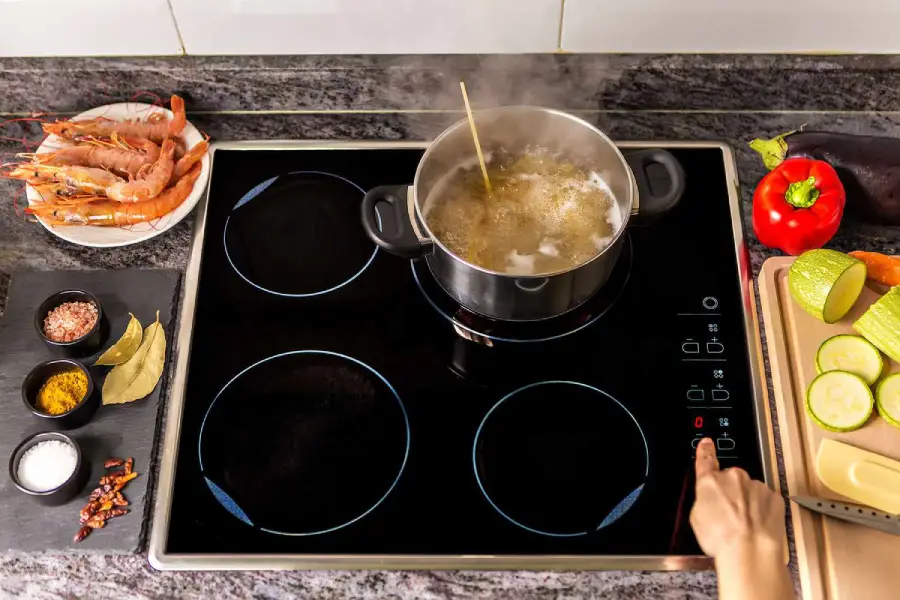
Induction cooktops are a must-have in any modern kitchen. Induction cooktops are popular for safety, convenience, and style. Nevertheless, if you are considering purchasing an induction cooktop, you need to consider certain points to ensure that the appliance meets your specific needs. This guide will help you decide how to choose and purchase the best induction cooktop to heat things up in the kitchen.
What Is an Induction Cooktop?
Induction cooktops employ electromagnetic principles to directly heat compatible pots and pans positioned on their surfaces. This results in remarkable practicality and energy efficiency, particularly when compared to gas or electric stoves. These cooktops rapidly reach the desired temperature, all while maintaining a high level of safety. The significant heat is localized only to the area in direct contact with the cookware. In the absence of a pot or pan on the cooktop, or if the cookware is not compatible with induction, the stove will not activate.
From a scientific perspective, the process is quite straightforward. When the induction range is activated, an internal metal coil generates a magnetic field. Cookware containing sufficient magnetic material, such as iron, induces an electrical current upon contact with this magnetic field. This current results in the direct heating of the cookware itself, without affecting anything else. The absence of radiant heat helps in preserving the coolness of the rest of the stovetop and your kitchen's ambient temperature.
How Do Induction Cooktops Work?
A cooktop with an induction burner looks like an electric cooktop, but it works differently than an electric cooktop. Instead of heating up a burner and then transferring that heat to a pot like an electric or gas cooktop, induction cooktops create an electro-magnetic field that heats cookware by creating energy around their glass surface.
Induction cooktops cook your food super quickly by using the heat of the cookware instead of the heat from the cooktop, so your stove stays cool during cooking because of the magnetism between the stove and cookware. There is no doubt that induction cooktops are the best, because they heat up quickly and react quickly to temperature changes.
Types of Induction Cooktops
There is a wide array of brands and models offering induction cooktops, which may appear similar to smooth-surface electric cooktops when viewed from a distance. Beneath the glass-ceramic surface, metal coils generate the magnetic field required for induction cooking. While the material is robust and resistant to breakage, it is susceptible to scratches.
Induction cooktops fall into two primary categories, based on size and the number of heating zones. These heating zones are reminiscent of those found on traditional gas stoves. In addition to standard freestanding units, portable units are also available.
Induction cooktops fall into two primary categories, based on size and the number of heating zones. These heating zones are reminiscent of those found on traditional gas stoves. In addition to standard freestanding units, portable units are also available.
2 to 4 Heating Zones
Typical household induction cooktops usually feature two to four circular heating zones. These usually include at least one small and one large zone, much like conventional gas or electric stoves. As the number of zones and the overall size of the cooktop increase, so does the average cost per unit.
While it is feasible to find single-zone units, they are less common for standard-sized homes. If you require more than four heating zones, consider opting for a flexinduction cooktop to maximize your purchase's versatility.
Flexible Induction
Flexible induction cooktops offer "flexible" heating zones, often referred to as flexizones. In these models, the cooking surface spans the entire cooktop, allowing you to utilize almost any area for cooking, as opposed to being confined to specific zones. This type of cooktop provides a significant advantage, as it eliminates concerns about cookware size, permitting you to cook on various areas without limitations to small or circular regions.
Portable vs. Freestanding/Non-portable
Portable induction cooktops typically incorporate only one or two heating zones, making them compact and easy to move around. These smaller units are highly convenient for outdoor cooking or in environments with limited counter space. Conversely, freestanding induction cooktops can be installed directly into your counter (if it is solely the cooktop) or as part of a complete oven unit. Your choice between portable and freestanding induction cooktops should align with the specific requirements of your kitchen.
Portable induction cooktops tend to be more budget-friendly than their freestanding, non-portable counterparts, with the ultimate cost dependent on the unit's size and number of heating zones.
Pros and Cons of Induction Cooktops
Before you make your final purchase, make sure you have a clear understanding of the pros and cons of an induction cooktop.
Pros:
- Speed and Efficiency: Induction cooktops are incredibly fast at heating up. They are more energy-efficient than traditional electric or gas stoves because they directly heat the cookware, wasting less heat. This means your food cooks faster, and you can save on energy bills.
- Safety: One of the most significant advantages of induction cooktops is safety. The cooking surface remains relatively cool to the touch because it's only the cookware that gets hot. This reduces the risk of burns and makes it safer for households with children.
- Precision and Control: Induction cooktops provide precise temperature control. You can make fine adjustments to cooking temperature, making it easier to simmer, boil, or sauté with accuracy.
- Easy to Clean: The smooth, glass-ceramic surface of induction cooktops is easy to clean. Spills and splatters don't burn onto the surface since it doesn't get hot, and you can quickly wipe them away.
- Sleek Design: Induction cooktops often have a sleek and modern appearance, adding a contemporary touch to your kitchen.
- No Open Flames: Unlike gas stoves, there are no open flames with induction cooktops, reducing the risk of gas leaks and kitchen fires.
- Even Heating: Induction provides even heating across the entire bottom surface of the cookware, preventing hot spots and uneven cooking.
Cons:
- Initial Cost: Induction cooktops are generally more expensive to purchase than traditional electric or gas stoves. However, their long-term energy savings may offset the initial investment.
- Cookware Compatibility: Not all cookware is compatible with induction. You need pots and pans made from magnetic materials like cast iron or stainless steel. If a magnet sticks to the bottom, it's suitable for induction.
- Noise: Some induction cooktops can emit a slight humming noise, which may be bothersome to some users.
- Installation: If you're replacing an existing stove with an induction cooktop, you might need to upgrade your kitchen's wiring to accommodate the higher power requirements.
- Learning Curve: Induction cooking may have a learning curve if you're accustomed to traditional gas or electric stoves. You need to get used to the speed and precision of the heat control.
- Electromagnetic Interference: Some users have reported interference with electronic devices like radios and pacemakers due to the electromagnetic fields generated by induction cooktops. However, this is relatively rare.
Points to Consider When Buying an Induction Cooktop
Here are some of the most important factors to consider when choosing an induction cooktop for your home.
1.Cooktop Power Rating
When in search of an excellent induction stove, the first aspect to contemplate is the cooktop's power rating. A higher power rating translates to faster cooking, though it may come at a higher cost. Most induction cooktops typically fall within the range of 1000-2000W. Therefore, if you desire expedited cooking, opting for an induction cooktop with a higher power rating is advisable.
When in search of an excellent induction stove, the first aspect to contemplate is the cooktop's power rating. A higher power rating translates to faster cooking, though it may come at a higher cost. Most induction cooktops typically fall within the range of 1000-2000W. Therefore, if you desire expedited cooking, opting for an induction cooktop with a higher power rating is advisable.
2.Cooktop Pan Compatibility
Each induction cooktop is designed to accommodate a specific range of pan sizes. If your cookware is smaller than the cooktop's supported pan size, it won't be detected by the cooktop, preventing it from heating the pot. To maximize efficiency, it's essential to match the cookware's dimensions with the induction cooktop's coil size.
Each induction cooktop is designed to accommodate a specific range of pan sizes. If your cookware is smaller than the cooktop's supported pan size, it won't be detected by the cooktop, preventing it from heating the pot. To maximize efficiency, it's essential to match the cookware's dimensions with the induction cooktop's coil size.
3.Pre-Set Menus
For user convenience, many contemporary induction cooktops are equipped with pre-set menus. These intelligent cooktops adjust their temperature settings based on the type of dish you're preparing. Whether you're simmering milk, cooking rice, making roti, or sautéing vegetables, the induction cooktop automatically regulates its temperature to ensure perfectly cooked dishes with a simple touch.
For user convenience, many contemporary induction cooktops are equipped with pre-set menus. These intelligent cooktops adjust their temperature settings based on the type of dish you're preparing. Whether you're simmering milk, cooking rice, making roti, or sautéing vegetables, the induction cooktop automatically regulates its temperature to ensure perfectly cooked dishes with a simple touch.
4.Safety Features
Safety is a paramount consideration when selecting an induction cooktop. Modern models, such as those offered by Zsheme, feature an auto-pan detection function. This technology promptly deactivates the heating element upon cookware removal. Moreover, should you inadvertently forget to power off the appliance, the cooktop will automatically switch off if the pan reaches an excessive temperature.
Safety is a paramount consideration when selecting an induction cooktop. Modern models, such as those offered by Zsheme, feature an auto-pan detection function. This technology promptly deactivates the heating element upon cookware removal. Moreover, should you inadvertently forget to power off the appliance, the cooktop will automatically switch off if the pan reaches an excessive temperature.
5.Portability
The choice between a portable and fixed cooktop depends on user preference. Portable induction cooktops offer the convenience of mobility, allowing users to transport the appliance to various locations. Whether you're planning to cook on your rooftop or in your backyard, a portable cooktop ensures effortless portability, catering to your diverse culinary needs.
The choice between a portable and fixed cooktop depends on user preference. Portable induction cooktops offer the convenience of mobility, allowing users to transport the appliance to various locations. Whether you're planning to cook on your rooftop or in your backyard, a portable cooktop ensures effortless portability, catering to your diverse culinary needs.
Bottom Line
Compared to gas or electric stoves, induction cooktops are more energy efficient, environmentally friendly, and easier to maintain. Whether you need more control over your cooking or don’t mind the price tag, induction cooktops are a great option because they speed up your cooking times and make it safer overall.