
A ceramic cooktop, often referred to as a ceramic glass cooktop or ceramic glass stove, is a type of cooking surface commonly found in modern kitchens.
While these appliances aren't exactly new technology, every year they become more efficient and convenient. In addition to faster heating than gas, ceramic cooktops offer more cooking power than electric coils, and offer a sleek, low-profile design. But what are ceramic cooktops and how do they work? Here’s what you need to know before you purchase one of these powerhouses and how they can all simplify your life.
While these appliances aren't exactly new technology, every year they become more efficient and convenient. In addition to faster heating than gas, ceramic cooktops offer more cooking power than electric coils, and offer a sleek, low-profile design. But what are ceramic cooktops and how do they work? Here’s what you need to know before you purchase one of these powerhouses and how they can all simplify your life.
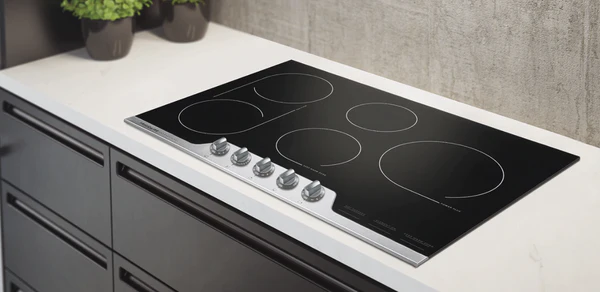
What Is a Ceramic Cooktop?
The ceramic cooktop is any cooktop that has a smooth surface made of tempered ceramic glass, though you'll usually find them grouped together on the sales floor, there are actually quite a few different options available to choose from, such as:
- Radiant Cooktops: Radiant cooktops utilize heated metal coils positioned beneath a ceramic glass surface to generate heat for cooking.
- Halogen Cooktops: Halogen cooktops employ halogen bulbs, as opposed to metal coils, to produce the heat required for cooking.
- Semi-Halogen Cooktops: Semi-halogen cooktops combine the use of metal coils and halogen bulbs to create the necessary cooking heat.
- Induction Cooktops: Induction cooktops operate through the interaction of magnets with the metal in your cooking pans, inducing heat for cooking purposes.
The practical distinctions among the first three are relatively minor. Halogen bulbs instantly illuminate, providing a constant indicator of the cooktop's active status, and their heating elements tend to cool down marginally quicker when compared to radiant cooktops. Apart from these nuances, they all offer equivalent cooking performance and the same array of conveniences.
Induction, however, stands apart in terms of functionality. These cooktops exhibit rapid heating capabilities, often boiling water approximately twice as fast as their counterparts. This remarkable speed arises from their unique heating method, as they don't rely on a traditional heat source to transfer energy to the cookware. Instead, they rely on the interaction between magnets and metallic cookware, which heats the pan directly, effectively transforming it into a heating element. Consequently, the cooktop remains cool until a compatible pan is placed on it, even when powered on.
The science underlying induction cooking is somewhat intricate, and if you wish to delve deeper into the subject, we recommend perusing an article that delves into the intricacies of induction technology. Should you have any further inquiries, do not hesitate to contact us. We are always delighted to share our expertise in the realm of appliances. In the context of your kitchen, induction translates to swifter cooking and a safer cooktop for your family.
Induction, however, stands apart in terms of functionality. These cooktops exhibit rapid heating capabilities, often boiling water approximately twice as fast as their counterparts. This remarkable speed arises from their unique heating method, as they don't rely on a traditional heat source to transfer energy to the cookware. Instead, they rely on the interaction between magnets and metallic cookware, which heats the pan directly, effectively transforming it into a heating element. Consequently, the cooktop remains cool until a compatible pan is placed on it, even when powered on.
The science underlying induction cooking is somewhat intricate, and if you wish to delve deeper into the subject, we recommend perusing an article that delves into the intricacies of induction technology. Should you have any further inquiries, do not hesitate to contact us. We are always delighted to share our expertise in the realm of appliances. In the context of your kitchen, induction translates to swifter cooking and a safer cooktop for your family.
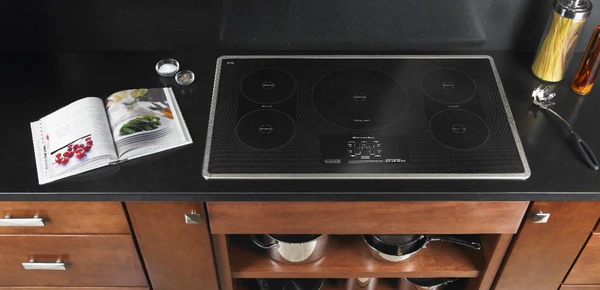
Pros and Cons of Using a Ceramic Glass Cooktop
Pros Of Using Ceramic Cooktop
A ceramic cooktop is easy to clean, it cooks faster, it has high-tech safety features, it is easy to install, and what's not to like about it?
Firstly, ceramic cooktops are much easier to clean. The smooth, sealed heating elements allow you to wipe up spills with a damp cloth or soft sponge rather than collecting grease on metal grates.
Some ceramic cooktops also come with features that make cooking easier and safer. Many come with heat indicators to let you know when the stovetop is hot, and induction cooktops do not even heat until a pan is placed on them. Kids can even help out in the kitchen safer with ceramic cooktops that turn off automatically after a set period of time. With ceramic cooktops, you don't have to worry about running potentially dangerous gas lines through your kitchen -- all you need is an electrical connection to use them. A reduced risk of gas leaks can make your whole home much safer in case of a fire, earthquake, storm, or flood.
In addition to all of that, they are stylish and on-trend! More and more kitchens are adopting the hidden or paneled appliance look, and ceramic cooktops can help your appliances blend right into the surroundings.
Firstly, ceramic cooktops are much easier to clean. The smooth, sealed heating elements allow you to wipe up spills with a damp cloth or soft sponge rather than collecting grease on metal grates.
Some ceramic cooktops also come with features that make cooking easier and safer. Many come with heat indicators to let you know when the stovetop is hot, and induction cooktops do not even heat until a pan is placed on them. Kids can even help out in the kitchen safer with ceramic cooktops that turn off automatically after a set period of time. With ceramic cooktops, you don't have to worry about running potentially dangerous gas lines through your kitchen -- all you need is an electrical connection to use them. A reduced risk of gas leaks can make your whole home much safer in case of a fire, earthquake, storm, or flood.
In addition to all of that, they are stylish and on-trend! More and more kitchens are adopting the hidden or paneled appliance look, and ceramic cooktops can help your appliances blend right into the surroundings.
Cons Of Using a Ceramic Cooktop
Ceramic cooktops have almost no cons, which makes them ideal for home use.
Having a scratched glass is one of the biggest concerns of using a ceramic cooktop. Rough-bottomed pans or dropped items can potentially scrape or even crack the surface -- but your cooktop's ceramic glass is tempered and designed to withstand heavy use, so you'd have to drop something really heavy to break it.
Most professional chefs prefer flame cooking because it offers uniformity. Radiant and halogen cooktops are less precise and heat slower. Induction, on the other hand, offers a solution to those weak points other ceramic cooktops struggle with, offering a fast, powerful heat output and precise temperature control that matches what you'll find on a traditional gas burner.
Another upside of induction cooktops is that not all pots and pans work with magnetic cooking technology. If you're considering an induction cooktop, know that you may also need some new cookware.
Having a scratched glass is one of the biggest concerns of using a ceramic cooktop. Rough-bottomed pans or dropped items can potentially scrape or even crack the surface -- but your cooktop's ceramic glass is tempered and designed to withstand heavy use, so you'd have to drop something really heavy to break it.
Most professional chefs prefer flame cooking because it offers uniformity. Radiant and halogen cooktops are less precise and heat slower. Induction, on the other hand, offers a solution to those weak points other ceramic cooktops struggle with, offering a fast, powerful heat output and precise temperature control that matches what you'll find on a traditional gas burner.
Another upside of induction cooktops is that not all pots and pans work with magnetic cooking technology. If you're considering an induction cooktop, know that you may also need some new cookware.
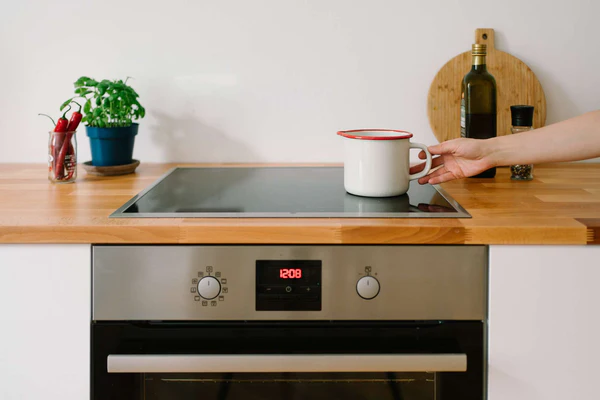
OEM/ODM Ceramic Cooktop From HEME
HEME offers oem/odm ceramic cooktop solutions.
Zhongshan HEME Kitchen Appliance Co., Ltd. was established in 2000 and stands as one of the foremost OEM manufacturers in the production of built-in hobs, cooker hoods, and electric ovens. Over the past two decades, their continued growth in the overseas market has been made possible through the unwavering trust and support of their customers.
Their expansive factory, covering an area of 60,000 square meters, is equipped with state-of-the-art production lines and testing facilities. To better serve their esteemed international clientele, HEME has forged partnerships with leading global suppliers of vital components, including France's Eurokera, Germany's EGO, Germany's Infineon, Italy's Sabaf, and Spain's Orkli. These partnerships ensure that HEME's products meet the stringent international standards for design, durability, energy efficiency, performance, safety, and service.
Furthermore, adhering to the rigorous implementation of ISO 9001 and holding approvals such as CB, CCC, CE, ETL, ErP, REACH, RoHS, SASO, UKCA, among others, HEME has successfully exported their products to over 60 countries and regions worldwide. Their precise, tailor-made products have gained popularity and proven suitable for diverse consumer demographics.
Their expansive factory, covering an area of 60,000 square meters, is equipped with state-of-the-art production lines and testing facilities. To better serve their esteemed international clientele, HEME has forged partnerships with leading global suppliers of vital components, including France's Eurokera, Germany's EGO, Germany's Infineon, Italy's Sabaf, and Spain's Orkli. These partnerships ensure that HEME's products meet the stringent international standards for design, durability, energy efficiency, performance, safety, and service.
Furthermore, adhering to the rigorous implementation of ISO 9001 and holding approvals such as CB, CCC, CE, ETL, ErP, REACH, RoHS, SASO, UKCA, among others, HEME has successfully exported their products to over 60 countries and regions worldwide. Their precise, tailor-made products have gained popularity and proven suitable for diverse consumer demographics.